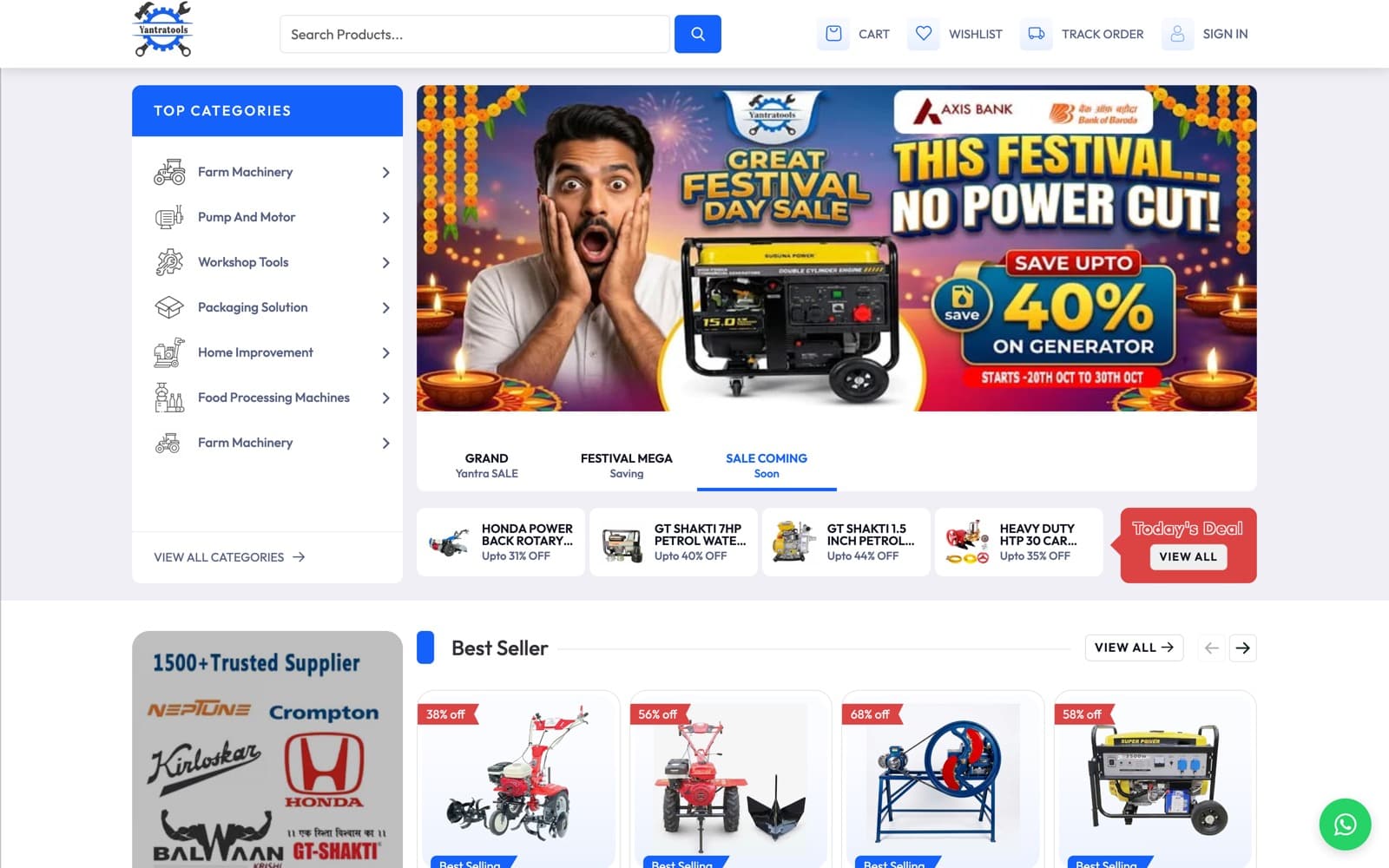
Yantratools sells farm machinery, pumps, workshop tools and generators across India. When I took over on 6 Sep 2026 it had tens of thousands of customers, no off-box backups, no CI, and no way for third-party sellers to work on the platform.
I now run it. I built the seller side end to end, the ops layer, and the shipping integration.
By the numbers
- 62K+ registered customers, 2,800+ products
- 100+ seller API routes, 7 seller models
- 4 apps deployed by CI/CD (storefront, admin, seller portal, API)
- Backups from none to snapshots, nightly verified dumps and a tested restore
The seller side
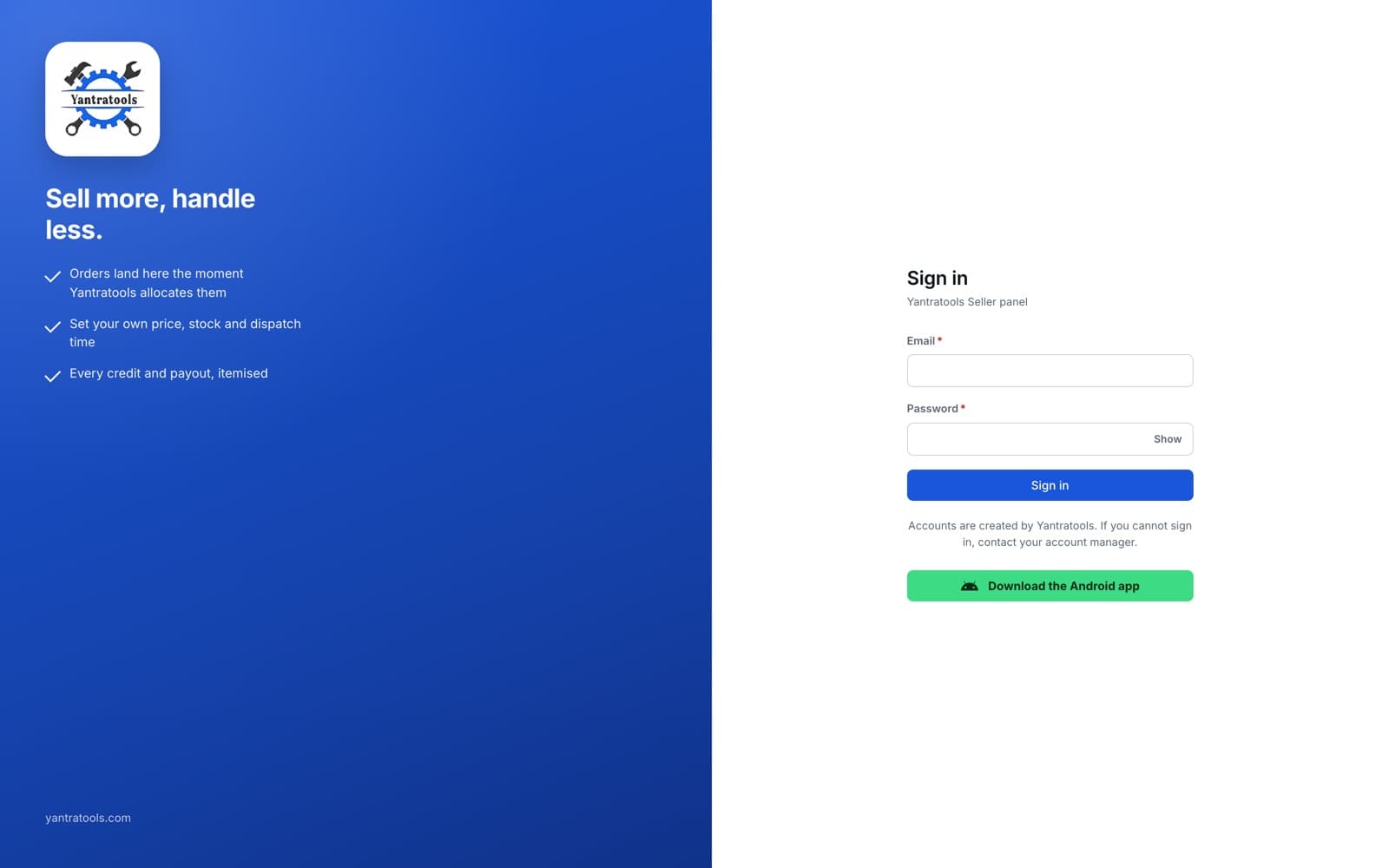
- Seller portal (Angular 20, phone-first, no UI library): dashboard, orders, returns, inventory, enquiries, payments, support and policies. Seven sections are permission-gated and mirror the server's permissions, so a seller only sees what their admin turned on.
- Seller API: 106 route definitions, a wallet ledger that seller and admin both read (so balances always match), an order-confirmation gate before orders reach sellers (25,251 old orders backfilled), and a cancel ledger with reversals and fees.
- Android seller app (Expo, expo-router, NativeWind): orders, inventory, enquiries, payments, returns and support, with push notifications, an inbox and over-the-air updates.
Making it safe to change
Day one: the only backups were folders on the same disk as the database, and the API had restarted 86 times.
Backups in three layers: daily and weekly disk snapshots, a nightly MongoDB dump that is checked and copied to S3 for 30 days, and versioned copies of uploads and config. The server's role can upload but cannot delete. A restore drill restores into a throwaway database and compares counts.
CI/CD for all four apps on GitHub Actions: tests run against a real MongoDB container, then the build ships over a deploy-only SSH key. On the server, each release unpacks into its own folder, a symlink flips atomically, PM2 reloads, and a health check reverts the release by itself if it fails. Rollback is one command, and a config guard blocks any deploy that expects a config key the server doesn't have.
Shipping and SEO
I fixed three breaks in the Bigship shipping integration (login had been dead for 14 days) and built order creation, courier rates, labels and cancellation. On the storefront I added a 3,001-URL sitemap, robots rules and fixes for 50 broken category redirects.
Finding the real conversion problem
The team thought checkout was broken. The data said otherwise: orders under ₹10,000 converted at 45.6%, and orders just above it at 13.9%. The drop was the cash-on-delivery limit, not the payment gateway. That changed what the business worked on next.