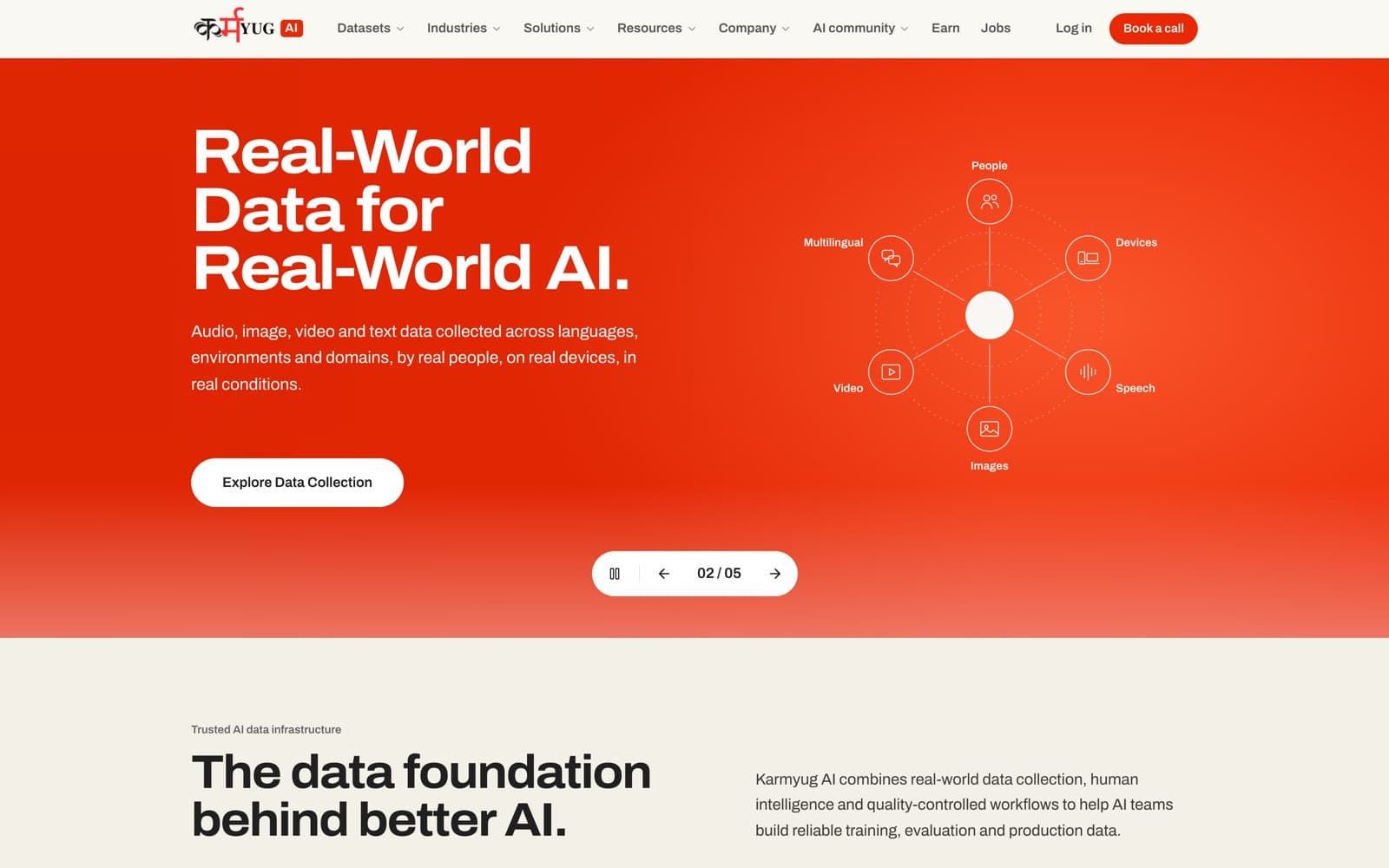
Karmyug AI collects and labels training data for AI companies: speech, text, images and video, recorded by real people on real devices in their own language. Workers sign up, pass a short test and an ID check, record tasks on their phone, and get paid for every approved task.
I was the only engineer. I designed and built all four apps and the API, from the first commit on 22 Sep 2026 to the GCP launch on 22 Oct.
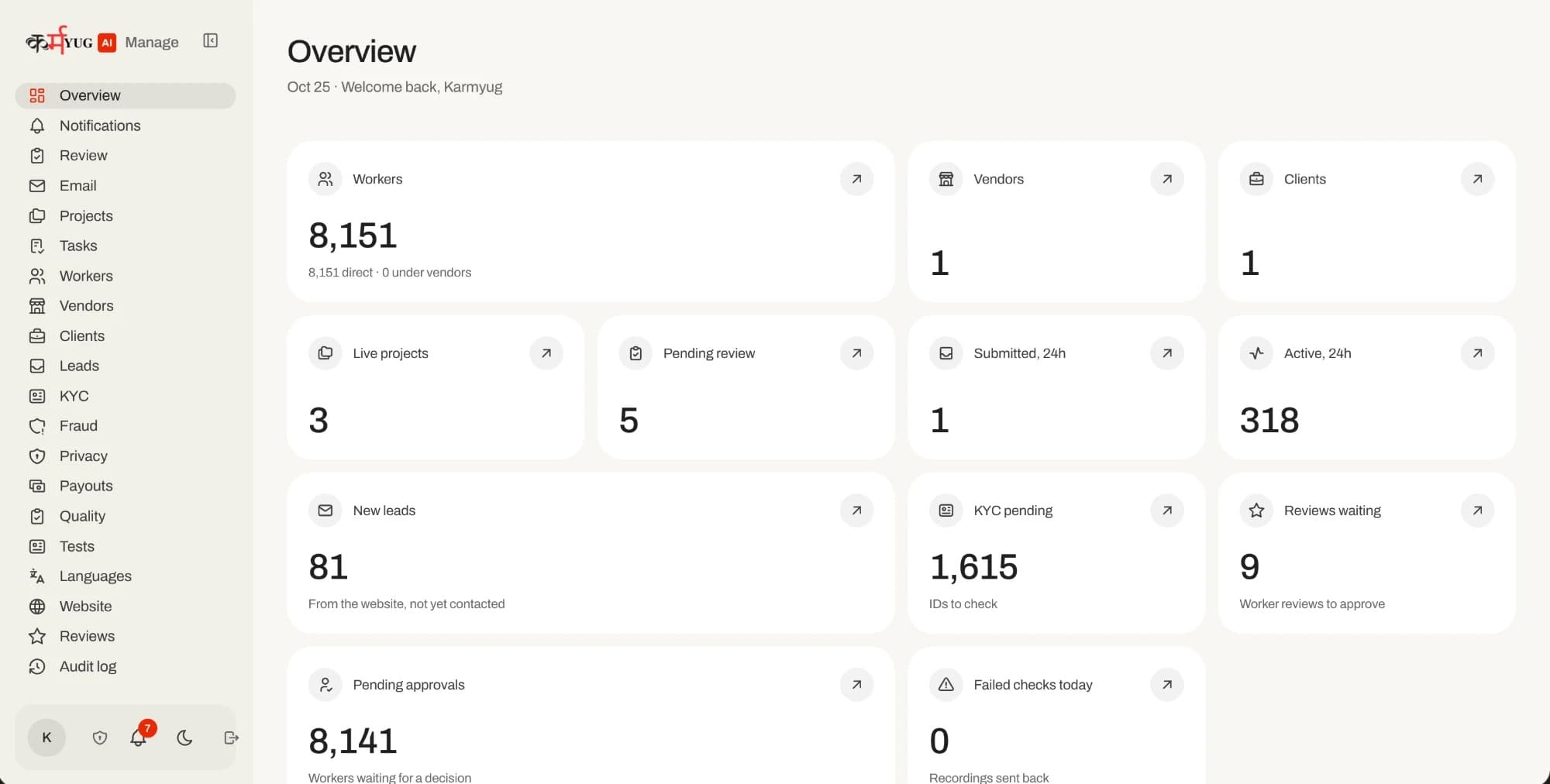
By the numbers
- 8,000+ workers signed up in about 4 days after launch
- 4 production apps plus an API: public site (88 pages), worker app, admin (42 pages), API
- 200+ API routes, 37 data models, 33 test files
- Load test: 80 people recording at once, 1,807 recordings accepted in 90 seconds, 0 errors
The worker app
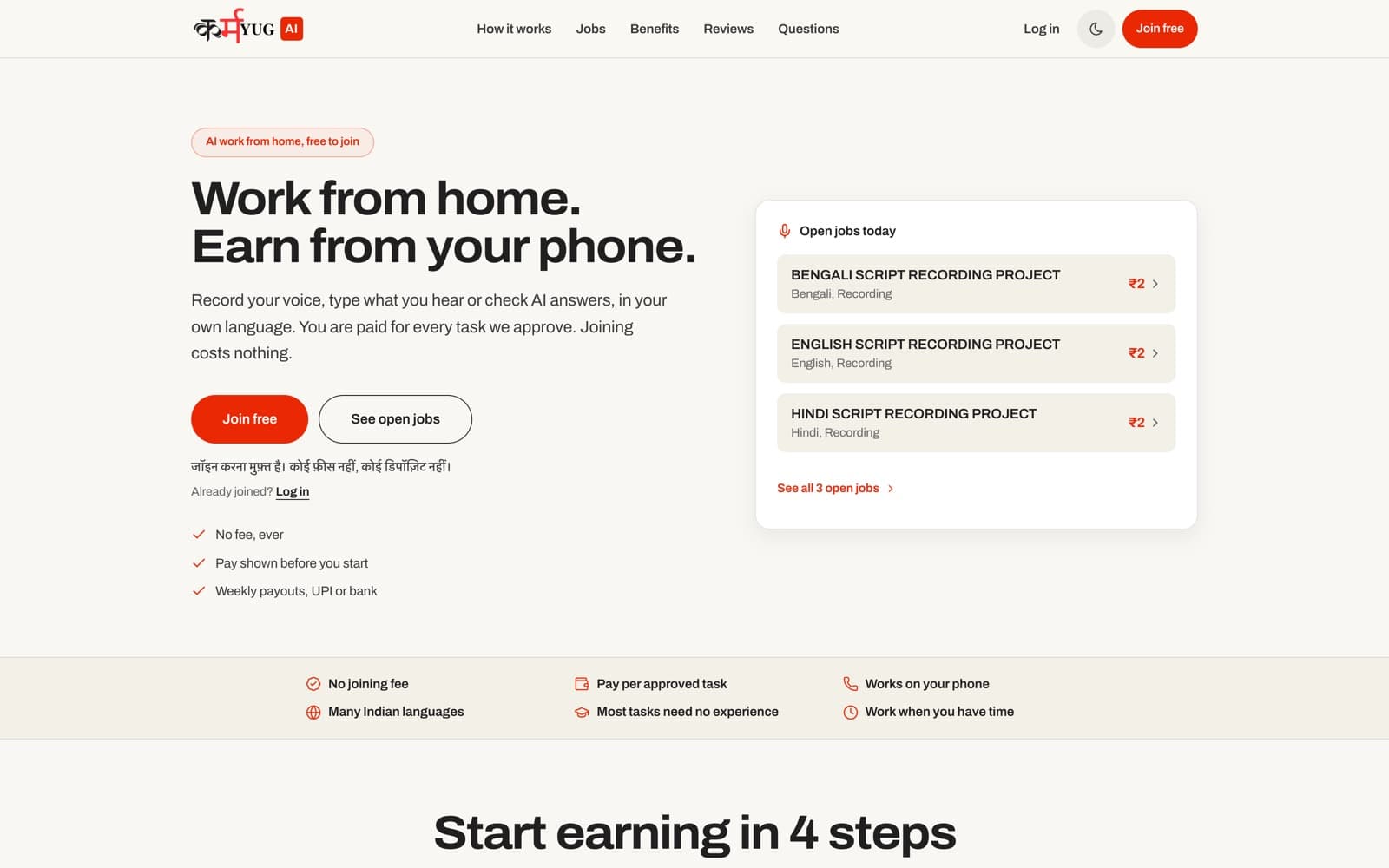
A phone-first PWA. New workers go through a checklist (agreements, profile, a qualification test, ID check with a selfie taken in the page), then claim tasks with a 30-minute hold so two people never record the same prompt.
The recording room checks audio before upload: 16-bit WAV, length, loudness, clipping and silence. Conversation tasks let 2 to 8 people record on one phone. Earnings, history and payout requests are all in the app.
Quality and fraud
Bad data is worse than no data, so quality runs in layers:
- In the browser before upload: format, length, loudness, clipping, silence.
- On the server: speech present, reading speed, duplicate audio.
- A Python service (FastAPI + faster-whisper) for language ID, word error rate against the script and signal-to-noise.
Fraud signals flag duplicate audio, shared devices, shared IPs and VPNs. Reviewers get a queue with audio playback, approve or reject with a reason, and can bulk-approve by rule.
The admin panel
Projects with pay rates, quotas and pilot batches; task upload by CSV or audio; workers, vendors and clients; KYC; payouts with TDS; a languages directory; email campaigns and automations; a CMS for the public site; an audit log; and dataset export as a ZIP for the client.
Launch on GCP
Production runs on Google Cloud in Mumbai: four Cloud Run services, Cloud SQL Postgres 17 with daily backups and point-in-time recovery, Cloud Storage, a global HTTPS load balancer with Cloud CDN, Secret Manager and Cloud Scheduler.
I moved production from the earlier Supabase/Vercel setup to GCP the night before launch and verified it before switching traffic: 35 of 35 tables matched and 542 of 542 uploaded files matched by checksum.
What I learned
Launch day is a load test you don't control. Building the checks into the browser saved the server from thousands of bad uploads, and the dry-run load test (80 workers recording non-stop) is why sign-up day was boring in the good way.